Machine learning is a subset of artificial intelligence (AI) that focuses on the development of algorithms capable of identifying patterns within training data and leveraging those patterns to generate accurate insights from new datasets. By enabling systems to learn from data and improve performance over time, machine learning facilitates data-driven decision-making and predictive analysis without relying on explicitly programmed instructions.
Editor’s Pick
Machine learning accounted for approximately 42% of the total artificial intelligence (AI) industry value in 2024, highlighting its critical role in the broader AI ecosystem.
Around 78.4% of organizations reported revenue growth following investments in machine learning technologies, demonstrating the technology’s growing business impact.
Machine learning emerged as the most prominent research area within AI in 2023, representing 75.7% of all AI-related publications.
Machine learning hardware performance, measured in 16-bit floating-point operations (FP16), has increased by approximately 43% annually, effectively doubling every 1.9 years.
Technological advancements have significantly improved cost efficiency, with machine learning-related computing costs declining by 30% annually, while energy efficiency has improved by approximately 40% per year.
Nearly 97% of organizations that have deployed machine learning solutions at scale reported measurable business benefits, with productivity improvements reaching up to 4.8 times in certain industrial applications, particularly in process optimization and predictive maintenance.
In customer support operations, the implementation of machine learning-powered language understanding models has reduced response processing times by approximately 60%, while simultaneously enhancing customer satisfaction levels.
Marketing teams leveraging machine learning-driven personalization and real-time customer scoring have reported 20%–30% improvements in conversion rates.
Approximately 42% of organizations have integrated machine learning solutions into their operational processes, while more than 40% remain in the experimentation or proof-of-concept (POC) stage.
According to Statistics Canada, 18.2% of businesses reported utilizing machine learning technologies to produce goods or deliver services during the 12 months preceding the second quarter of 2026.
Demand for MLOps and AI integration professionals increased by approximately 80% since the beginning of 2025, reflecting the growing need for skilled talent to support enterprise AI initiatives.
Marketing executives are more than twice as likely to invest in automation and machine learning technologies to enhance marketing performance and customer engagement strategies.
Industry estimates indicate that more than 95% of new industrial Internet of Things (IIoT) deployments will incorporate artificial intelligence and machine learning capabilities for real-time analytics, automation, operational efficiency, and enhanced security.
GlobalMachine Learning Market Highlights
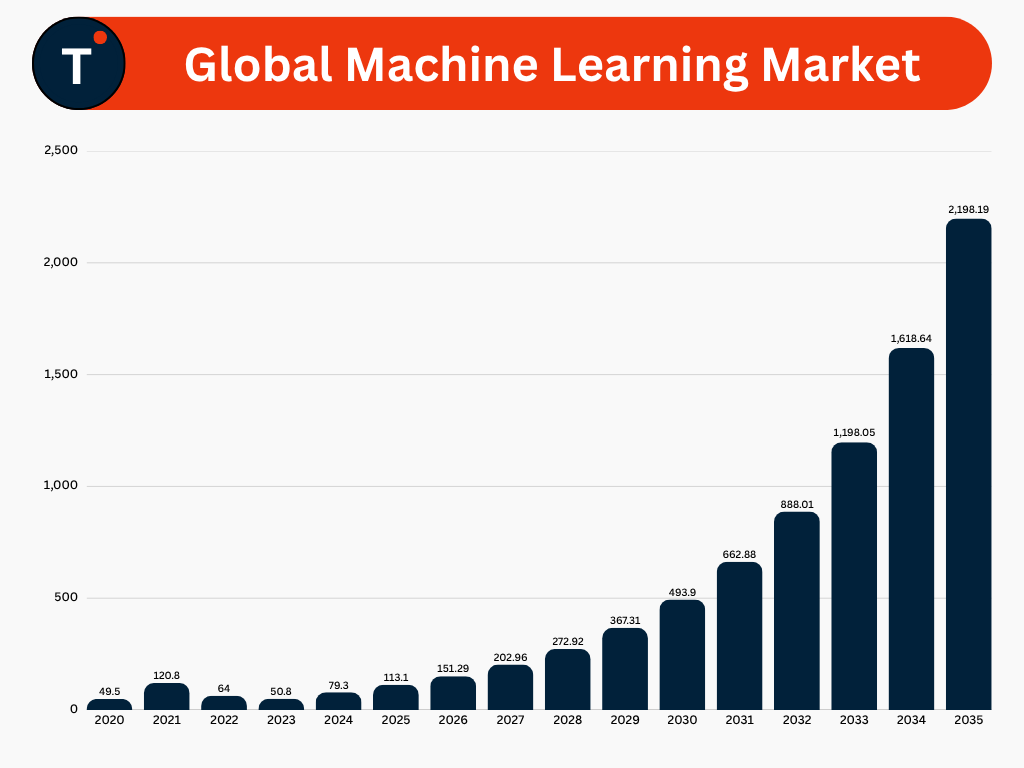
The global machine learning market was valued at US$ 151.29 billion in 2025.
The market is projected to expand at a robust CAGR of 34.6% during the forecast period.
Global machine learning market revenue is anticipated to increase from US$ 151.29 billion in 2025 to US$ 2,198.19 billion by 2035.
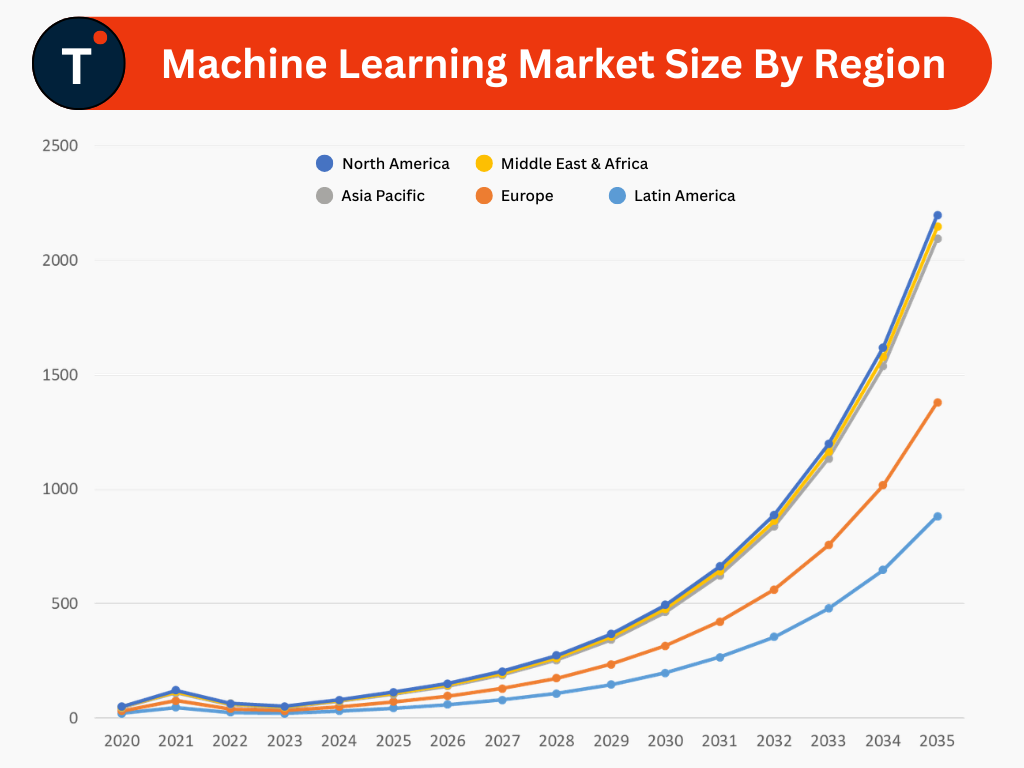
North America emerged as the leading regional market, accounting for 38.7% of the global market share in 2025.
The North American machine learning market was valued at US$ 58.89 billion in 2025.
The regional market is expected to reach US$ 882.35 billion by 2035, registering a CAGR of 35.1% over the forecast period.
The United States represented the largest contributor within North America, capturing 93.4% of the regional market revenue in 2025.
The U.S. machine learning market was valued at US$ 40.88 billion in 2025.
The U.S. market is projected to attain US$ 831.17 billion by 2035, expanding at a CAGR of 35.2%.
Asia Pacific ranked as the second-largest regional market, contributing 28.3% of global market revenue in 2025.
The Asia Pacific machine learning market is forecast to grow from US$ 32.01 billion in 2025 to US$ 715.09 billion by 2035, reflecting a CAGR of 36.6%, the highest among all regions.
Europe accounted for 24.6% of the global market share in 2025, with a market valuation of US$ 27.82 billion.
The European machine learning market is anticipated to reach US$ 497.19 billion by 2035, advancing at a CAGR of 33.4%.
Latin America held 4.5% of the global market revenue share in 2025, with a market value of US$ 5.09 billion.
The Latin American market is projected to grow to US$ 52.22 billion by 2035, registering a CAGR of 26.2%.
The Middle East & Africa region accounted for 3.9% of the global machine learning market share in 2025.
The Middle East & Africa machine learning market was valued at US$ 4.41 billion in 2025 and is expected to reach US$ 51.34 billion by 2035, expanding at a CAGR of 27.8%.
End-Use Verticals Analysis
The manufacturing sector emerged as the leading end-use vertical in the global machine learning market, accounting for 18.9% of total market revenue in 2025.
The finance sector ranked as the second-largest end-use industry, capturing 15.4% of the global market share in 2025, driven by increasing adoption of machine learning for fraud detection, risk assessment, and predictive analytics.
The healthcare sector represented 12.2% of the global machine learning market revenue in 2025, supported by growing applications in medical diagnostics, personalized medicine, and clinical decision support systems.
The transportation sector accounted for 10.6% of the market share in 2025, fueled by the rising deployment of machine learning in autonomous vehicles, route optimization, and predictive maintenance.
The security sector held 10.1% of the global machine learning market share in 2025, reflecting increasing demand for advanced threat detection, cybersecurity analytics, and surveillance solutions.
Industry
Market Share in 2025
Market Share in 2035
Manufacturing
18.9%
17.8%
Finance
15.4%
16.8%
Healthcare
12.2%
13.7%
Transportation
10.6%
10.4%
Security
10.1%
9.7%
Business & Legal Services
9.9%
9.1%
Energy
5.6%
5.3%
Media & Entertainment
5.2%
5.4%
Retail
4.7%
4.7%
Semiconductor
1.6%
1.8%
Others
5.8%
5.3%
General Statistics
Industry projections indicate that at least 30% of companies worldwide are expected to utilize artificial intelligence (AI) or machine learning (ML) in at least one sales process, highlighting the growing integration of intelligent technologies in revenue-generating functions.
Around 70% of high-performing marketing teams have established a well-defined AI and machine learning strategy, compared with only 35% of lower-performing marketing teams, underscoring the strategic value of AI adoption.
The implementation of no-code predictive analytics solutions has been shown to improve sales forecasting accuracy by up to 73%, making advanced analytics more accessible across organizations.
Businesses utilizing predictive analytics capabilities have demonstrated the ability to forecast future revenue with approximately 82% accuracy.
An estimated 56.5% of marketers employ machine learning for content personalization, enhancing customer engagement and campaign effectiveness.
Approximately 75% of Netflix users select content recommended by the platform’s machine learning algorithms, illustrating the influence of AI-driven recommendation systems on consumer behavior.
Machine learning-powered recommendation engines are estimated to generate approximately US$1 billion in annual value for Netflix through improved customer retention and engagement.
Machine learning models applied in surgical environments have demonstrated accuracy rates of up to 80%, supporting improved clinical decision-making and procedural outcomes.
Approximately 65% of U.S. hospitals utilize AI-assisted predictive models to forecast patient health trajectories, optimize scheduling, and identify high-risk outpatients.
Around 84% of patients indicate a preference for interacting with AI assistants when faced with extended customer service hold times, reflecting increasing acceptance of AI-powered healthcare support.
Nearly 73% of digital professionals believe machine learning will have a significant impact on customer service operations, driven by advancements in automation and intelligent support systems.
The deployment of machine learning technologies can contribute to a 20%–30% reduction in customer service costs through process automation and enhanced operational efficiency.
Approximately 57% of businesses already utilize machine learning in customer service functions to improve customer experience and service delivery.
Global banking institutions are projected to reduce operational costs by approximately 22% by 2030 through the adoption of AI and machine learning technologies, potentially generating savings of up to US$1 trillion.
Several European banks have reported significant performance improvements following the implementation of machine learning models, including a 20% increase in new product sales, 20% reduction in capital expenditures, 20% increase in cash collections, and 20% decrease in customer churn.
The automation of middle-office operations through AI and machine learning technologies could generate cost savings of approximately US$70 billion for North American banks.
Certain banking institutions have reported a 98% reduction in new-account fraud incidents after deploying machine learning-based fraud detection models.
A survey of more than 250 human resource leaders found that 92% plan to increase investments in AI and machine learning across at least one HR function.
Approximately 76% of HR professionals believe that organizations failing to adopt AI and machine learning technologies within the next two years may face competitive disadvantages in achieving business objectives.
Around 56% of employers currently utilize machine learning and online platforms to identify and source job candidates, streamlining recruitment processes.
AI- and machine learning-powered candidate screening tools can reduce the time required for resume evaluation by approximately 75%, improving hiring efficiency.
Advanced machine learning-based antivirus solutions have demonstrated malware detection rates exceeding 90%, with some systems achieving accuracy levels as high as 98.32%.
Approximately 62% of organizations recognize opportunities to strengthen cybersecurity frameworks through the implementation of machine learning technologies.
Research studies have demonstrated that machine learning-based ransomware detection systems can achieve nearly 98% accuracy while maintaining minimal false-positive rates.
Only 15% of cybersecurity stakeholders believe that traditional, non-AI security tools are capable of effectively detecting or mitigating AI-generated cyber threats, highlighting the growing importance of AI-driven security solutions.
Number of Machine Learning Models by Organization
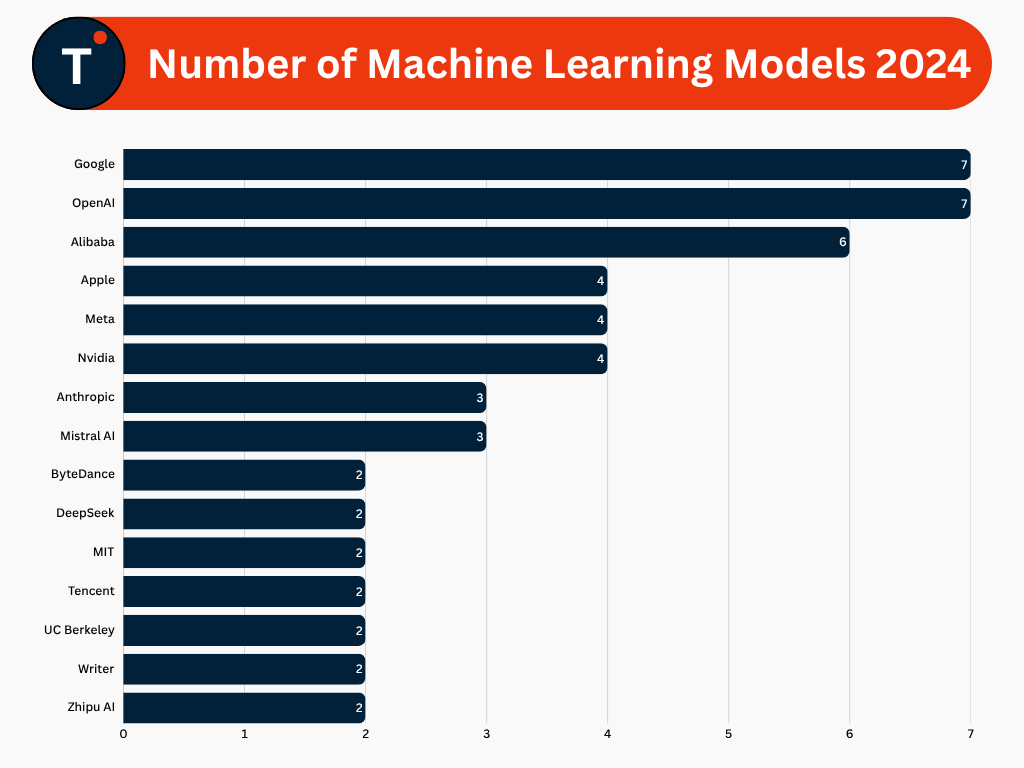
In 2024, the leading contributors to machine learning model development were Google and OpenAI, each releasing seven notable machine learning models, followed by Alibaba with six models.
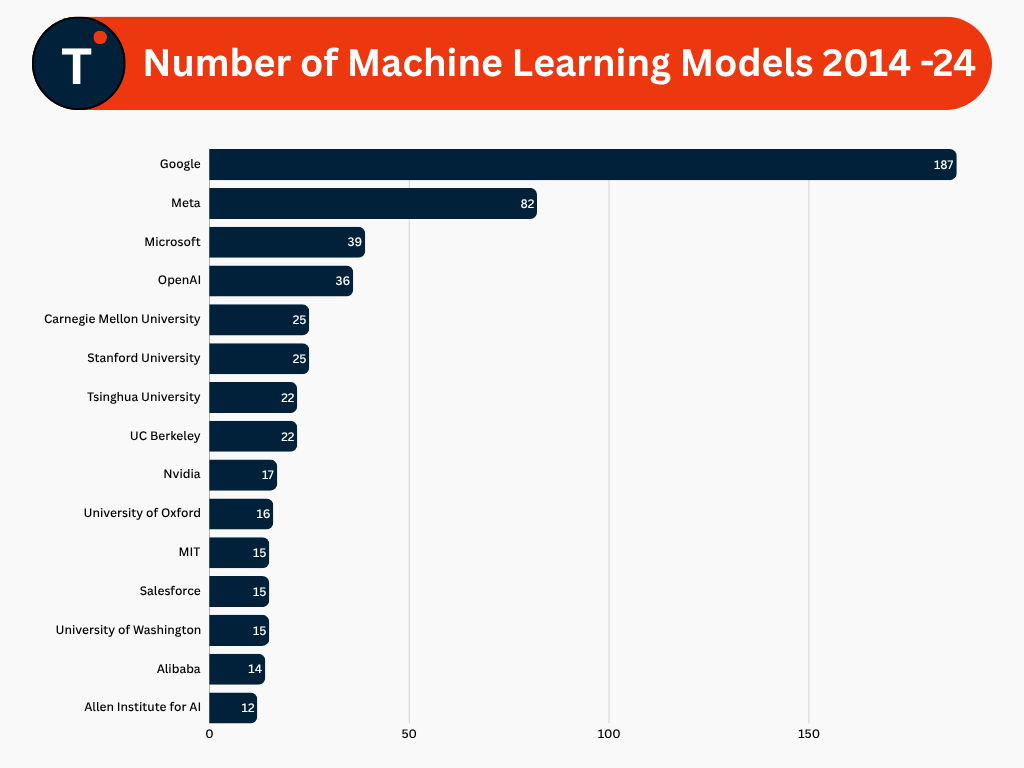
Since 2014, Google has maintained its position as the most prolific organization in machine learning model development, contributing 187 notable models, followed by Meta with 82 models and Microsoft with 39 models.
Among academic institutions, Carnegie Mellon University and Stanford University have been the most active contributors since 2014, each producing 25 notable machine learning models.
Tsinghua University ranked among the leading academic institutions in machine learning research and development, contributing 22 notable models since 2014.
Number of Machine Learning Models by Organization, 2024
Number of machine learning models by organization, 2014–24
Machine Learning Jobs & Salaries Statistics
The global machine learning workforce is estimated at approximately 1.6 million professionals, with more than 219,000 new positions added over the past year, reflecting strong demand for AI and machine learning talent.
Job postings related to artificial intelligence and machine learning increased by approximately 89% during the first half of 2025, underscoring the rapid expansion of the industry.
Within the United States, California accounted for 29% of machine learning job postings, maintaining its position as the leading employment hub, while New York represented 17%, demonstrating growing demand across major technology and business centers.
Entry-level machine learning engineering roles comprised only 3% of total job postings, highlighting the industry’s preference for experienced professionals with specialized technical expertise.
Approximately 59% of machine learning practitioners identified Amazon Web Services (AWS) as their primary cloud platform, making it the most widely adopted cloud environment for machine learning development and deployment.
The difficulty associated with hiring machine learning engineers declined from 72% in 2023 to 63% in 2024; however, talent acquisition remains a significant challenge for organizations seeking skilled professionals.
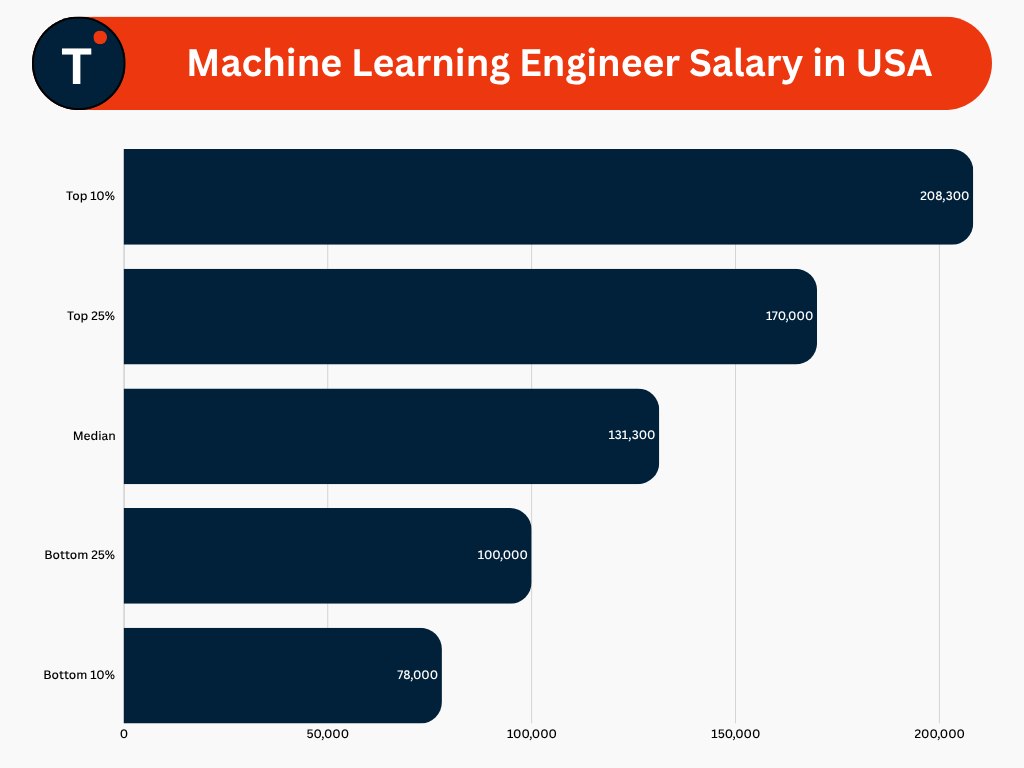
The average annual salary for Machine Learning Engineers in the United States is estimated at US$138,700, while the median annual salary stands at approximately US$131,300.
The top 25% of Machine Learning Engineers earn annual salaries exceeding US$170,000, reflecting strong compensation levels for highly skilled professionals.
The top 10% of earners in the profession receive annual compensation of more than US$208,300, highlighting the premium placed on advanced expertise and experience.
Conversely, approximately 25% of Machine Learning Engineers earn less than US$100,000 annually, while the bottom 10% earn below US$78,000 per year, illustrating salary variations based on experience, location, and skill level.
Machine Learning Engineer Salary by the US States:
States
Average Salary (USD/Year)
Median Salary (USD/Year)
Alabama
119,900
115,000
Arizona
117,300
112,500
California
168,800
165,300
Colorado
134,600
137,500
Connecticut
129,200
127,000
Florida
117,700
120,000
Georgia
117,300
113,000
Illinois
138,200
124,300
Indiana
110,500
110,000
Iowa
117,400
114,400
Kansas
117,500
124,500
Kentucky
90,200
95,000
Louisiana
113,000
105,000
Maryland
144,700
140,600
Massachusetts
153,300
151,000
Michigan
115,000
107,500
Minnesota
119,200
124,000
Missouri
123,900
137,500
Nevada
115,500
110,000
New-Jersey
120,300
123,400
New-York
162,900
150,000
North-Carolina
125,400
130,000
Ohio
107,000
108,000
Oregon
145,300
135,000
Pennsylvania
112,900
117,500
Rhode-Island
103,600
89,000
Tennessee
126,900
135,000
Texas
126,100
124,500
Utah
101,900
120,000
Virginia
161,400
142,400
Washington
154,500
156,000
Wisconsin
123,100
105,000
Key Business Objectives Driving Machine Learning Adoption
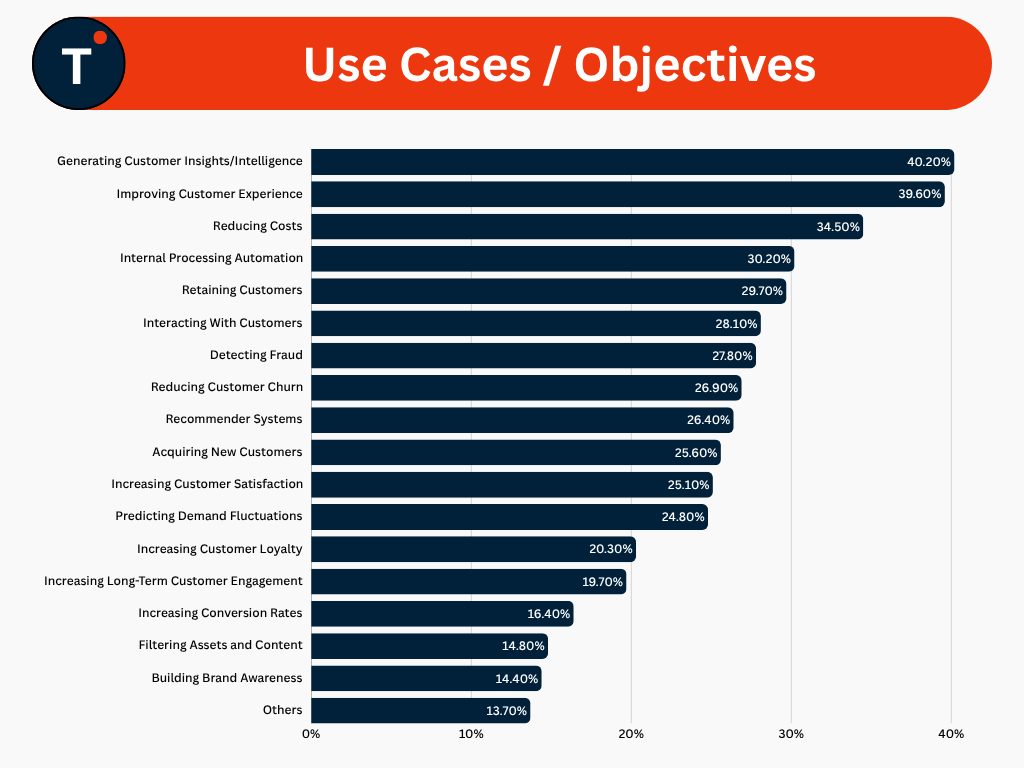
40.2% of businesses leverage machine learning to generate customer insights and intelligence, enabling more informed decision-making and targeted strategies.
39.6% of organizations utilize machine learning to improve customer experience, reflecting the growing emphasis on personalized and seamless customer interactions.
34.5% of organizations implement machine learning technologies to reduce operational costs, making cost optimization the leading business objective.
30.2% of companies deploy machine learning solutions to automate internal business processes, enhancing operational efficiency and productivity.
29.7% of organizations use machine learning to improve customer retention, supporting long-term customer relationship management initiatives.
28.1% of businesses apply machine learning to enhance customer interactions, enabling more responsive and intelligent engagement.
27.8% of companies implement machine learning technologies to detect and prevent fraudulent activities, strengthening risk management capabilities.
26.9% of organizations employ machine learning to reduce customer churn, helping businesses retain valuable customers.
26.4% of organizations utilize machine learning-powered recommendation systems to deliver personalized product and content suggestions.
25.6% of companies leverage machine learning to acquire new customers through data-driven targeting and predictive analytics.
25.1% of organizations utilize machine learning to increase customer satisfaction, improving overall service quality and customer engagement.
24.8% of businesses apply machine learning to predict demand fluctuations, enabling more effective planning, inventory management, and resource allocation.
20.3% of organizations use machine learning to increase customer loyalty, supporting long-term business growth and retention strategies.
19.7% of businesses leverage machine learning to enhance long-term customer engagement, fostering stronger and more sustained customer relationships.
16.4% of organizations utilize machine learning to improve conversion rates, optimizing marketing and sales performance.
14.8% of companies employ machine learning to filter and personalize assets and content, enhancing content relevance and user engagement.
14.4% of organizations use machine learning to strengthen brand awareness, supporting marketing and brand-building initiatives.
Role of Machine Learning in Voice Assistants
Machine learning serves as a foundational technology in modern speech recognition systems, enabling algorithms to learn patterns from audio data and accurately convert spoken language into text.
An estimated 8.63 billion voice-enabled devices are currently in active use worldwide, highlighting the widespread adoption of voice-based technologies.
The number of voice assistant users in the United States is projected to reach 160.3 million by the end of 2026, increasing from 154.7 million in 2025 and 141.6 million in 2022.
21.2% of the global population uses voice search on a regular basis, reflecting growing consumer preference for voice-driven interactions.
49.4% of online searches worldwide are conducted through voice interfaces, demonstrating the increasing importance of voice search technologies in digital engagement.
92.9% of users primarily access voice assistants through mobile devices, making smartphones the dominant platform for voice-based interactions.
34.5% of consumers use voice commands instead of typing on a daily basis, underscoring the convenience and efficiency of voice-enabled applications.
More than 1 billion voice searches are performed each month, highlighting the growing reliance on voice-assisted technologies for information retrieval.
Over 4.1 billion devices currently operate with conversational AI-powered voice assistants, demonstrating the expanding integration of machine learning-driven voice technologies across consumer and enterprise applications.
Top Machine Learning Marketing ROI Statistics
Organizations that strategically implement machine learning and artificial intelligence technologies achieve an average 10%–20% improvement in return on investment (ROI), demonstrating the significant business value generated through data-driven decision-making and process optimization.
Among AI and machine learning applications, marketing automation delivers the highest return on investment, with ROI reaching 544%, highlighting its effectiveness in enhancing campaign performance, customer engagement, and revenue generation.
Metric
ROI Figure
Category
Industry
1
Marketing Automation ROI
544%Return on investment
Automation
General Business
2
Bloomreach AI Marketing Automation
251%ROI · 12 months
Cost Savings
E-commerce
3
AI Sales Performance Improvement
10–20%Sales ROI uplift
Performance
Sales & Marketing
4
AI Investment Revenue Growth
3–15%Revenue increase
Revenue
Multi-Industry
5
Marketing Automation Success Rate
76%Positive ROI within 1 yr
Performance
General Business
6
Purchase Likelihood Increase
+27%Conversion lift
Performance
E-commerce
7
Salesforce Customer Marketing ROI
+25%Annual revenue
Revenue
CRM Users
8
Adobe Automation Revenue Impact
+25%Higher revenue
Revenue
Digital Marketing
9
AI Training Success Correlation
43%Higher project success
Performance
Multi-Industry
10
AI Leader Performance Advantage
1.5×Revenue growth · 3 yrs
Revenue
Enterprise
11
Retail AI Profit Growth
8%Annual profit growth
Revenue
Retail
12
Data-Driven Marketing Advantage
5–8%Higher ROI
Performance
Marketing
13
AI Analytics Adoption Rate
34.7%Businesses adopted · 2026
Automation
General Business
14
Campaign Setup Time Savings
90%Report meaningful savings
Productivity
Retail Marketing
15
GenAI Marketing Revenue Impact
66%See revenue increases
Revenue
Marketing & Sales
16
Customer Service Automation
80%Response time cut
Productivity
Direct-to-Consumer
17
AI Revenue Growth Expectations
87%Expect growth · next 3 yrs
Revenue
Multi-Industry
18
Manufacturing Productivity Gains
2–3×Productivity multiplier
Productivity
Manufacturing
19
Generative AI Content Productivity
2×Output improvement
Productivity
Content Creation
20
ML Market Growth Projection
34.8%CAGR · 2026–2030
Revenue
Technology Market
Machine Learning Technology Landscape
TensorFlow and PyTorch dominated the machine learning technology landscape, accounting for 42.37% and 25.65% of the market share, respectively, reflecting their widespread adoption across enterprise and research environments.
Technology
Market Share%
TensorFlow
42.37%
PyTorch
25.65%
OpenCV
17.81%
Keras
14.17%
PyTorch has gained significant momentum in the employment market, appearing in 37.7% of machine learning job postings, compared with 32.9% for TensorFlow, indicating growing industry demand for PyTorch expertise.
85% of artificial intelligence research papers published in 2026 utilized PyTorch, establishing it as the preferred framework within the global research community.
TensorFlow was used in 15% of AI research publications in 2026, maintaining a notable presence in academic and commercial machine learning development despite the increasing popularity of PyTorch.
Recent Developments
In June 2026, Salesforce announced a definitive agreement to acquire Fin (formerly Intercom), a leading provider of customer service agent solutions. The transaction is valued at approximately US$3.6 billion, subject to customary purchase price adjustments, and is expected to strengthen Salesforce’s AI-powered customer engagement capabilities.
In June 2026, Pinterest announced a US$4 billion infrastructure investment commitment through 2031, representing the largest infrastructure initiative in the company’s history. The company plans to leverage AWS Trainium and Graviton technologies to train and deploy artificial intelligence models at scale, supporting visual search and content discovery for more than 600 million monthly active users worldwide.
In May 2026, the International Atomic Energy Agency (IAEA) launched a new research project focused on data-driven prediction of radiation-induced structural changes in polymers. The initiative utilizes machine learning technologies to improve the accuracy and efficiency of predicting polymer behavior under radiation exposure.
In April 2026, Sony Interactive Entertainment entered into an agreement to acquire Cinemersive Labs, a United Kingdom-based machine learning and computer vision company. The acquisition is expected to enhance Sony’s capabilities in artificial intelligence, computer vision, and immersive digital experiences.
Conclusion
The global machine learning market is experiencing rapid expansion, driven by increasing adoption across industries, advancements in computing infrastructure, and growing investments in artificial intelligence technologies.
Organizations are leveraging machine learning to enhance operational efficiency, improve customer experiences, optimize decision-making, and generate measurable business value, positioning the technology as a critical component of digital transformation strategies.
Strong adoption across sectors including manufacturing, finance, healthcare, transportation, marketing, cybersecurity, and human resources highlights the broad applicability and scalability of machine learning solutions.
North America currently maintains market leadership, while Asia Pacific is emerging as the fastest-growing region, supported by increasing enterprise adoption, government initiatives, and digital transformation investments.
Add TriCityLocalNews as a Preferred Source on Google for instant updates!
Aaron Weiss is a dedicated technology journalist and market analyst specializing in breaking Artificial intelligence News. Holding a B.S.E. in Computer Science from Princeton University, Aaron combines technical authority with deep financial insight. He covers the complete lifecycle of tech enterprises, delivering crucial Funding News, emerging technology breakdowns, and high-impact Companies Announcement, including quarterly financial reports and strategic acquisitions.
We use cookies to ensure that we give you the best experience on our website. If you continue to use this site we will assume that you are happy with it.