Electric toothbrushes have witnessed significant adoption worldwide as consumers increasingly seek efficient and technologically advanced solutions to enhance their oral hygiene routines. Unlike manual toothbrushes, electric toothbrushes utilize automated brushing mechanisms that improve consistency and ease of use during daily dental care.
Industry research highlights that electric toothbrushes deliver superior oral health outcomes compared to manual alternatives. Their advanced cleaning technology enables more effective plaque removal, contributing to improved gum health and reducing the accumulation of bacteria associated with gingivitis and periodontal diseases. Enhanced plaque control also helps minimize the risk of tooth decay and other oral health complications, supporting better long-term dental hygiene and preventive care.
Editor’s Picks
90% of dentists recommend electric toothbrushes to support improved oral health outcomes.
23% of U.S. adults use an electric toothbrush, reflecting growing consumer adoption.
More than two-thirds of UK adults use electric toothbrushes, with 34 million users recorded and 12 million consumers switching from manual brushes over the past five years.
B2B inquiries for rechargeable toothbrushes increased by over 30% in 2024 on Alibaba, highlighting rising global demand.
Smart connectivity features accounted for 37% of consumer purchase preferences in 2025, making them the leading product attribute.
Eco-friendly features represented 34% of consumer preferences, indicating increasing demand for sustainable oral care products.
Price sensitivity influenced 29% of purchasing decisions, emphasizing the importance of affordability in the market.
In the U.S., female consumers accounted for 56.3% of electric toothbrush users, compared with 43.7% for male consumers.
Electric toothbrushes deliver 3,000–7,500 brushing motions per minute, enabling enhanced plaque removal and cleaning performance.
Long-term electric toothbrush users retain 20% more teeth than manual toothbrush users, demonstrating superior oral health benefits.
The top two brands, Oral-B and Philips, collectively controlled 74% of the U.S. electric toothbrush market, indicating a highly concentrated competitive environment.
Smart electric toothbrushes equipped with Bluetooth and app connectivity accounted for 45% of premium segment sales, increasing from 15% in 2020.
General Statistics
60,480 new cases of oral or oropharyngeal cancer are projected in the United States in 2026, highlighting the continued importance of preventive oral healthcare.
72 million U.S. adults lack dental insurance coverage, creating significant barriers to accessing routine dental care services.
21% of adults aged 20–64 have untreated tooth decay, indicating persistent oral health challenges among the adult population.
42.2% of adults aged 30 years and older are affected by periodontal disease, underscoring the prevalence of gum-related conditions.
72.6% of U.S. adults report some degree of dental fear, which may contribute to delayed dental visits and untreated oral health issues.
The U.S. dental market is projected to grow from USD 14.61 billion in 2026 to USD 40.69 billion by 2035, expanding at a CAGR of 12.05%.
24.7 million Americans reside in dental care shortage areas, reflecting ongoing disparities in access to oral healthcare services.
Electric toothbrushes achieve 21% greater plaque reduction than manual toothbrushes, demonstrating superior cleaning effectiveness.
82% of electric toothbrush users attained healthy gum status, compared with 24% of manual toothbrush users.
72% of oscillating-rotating electric toothbrush users transitioned to gingival health, significantly outperforming manual brushing outcomes.
49% of consumers globally own an electric toothbrush, reflecting widespread adoption across international markets.
60% of oscillating-rotating electric toothbrush users progressed from gingivitis to healthy gums within four weeks, highlighting rapid oral health improvements.
Combining an electric toothbrush with an oral irrigator resulted in a 43% reduction in bleeding sites after eight weeks, compared with manual brushing.
Oscillating-rotating electric toothbrushes achieved a 2% reduction in bleeding sites over five weeks, supporting improved gum health.
64% of consumers express interest in connecting their toothbrush to a smartphone, reflecting growing demand for smart oral care technologies.
30% of Americans brush their teeth at least once daily, while 51% brush twice per day and 10% brush three or more times daily.
60% of Americans brush their teeth both in the morning and before bedtime, demonstrating adherence to recommended oral hygiene practices.
Brushing habits vary throughout the day, with 38% of Americans brushing after breakfast, 17% after lunch, and 21% after dinner.
Consumers in the United States discard approximately 1 billion toothbrushes annually, highlighting the environmental impact of oral care products.
China exported 701 million toothbrush units to the U.S. market in 2023, emphasizing its critical role in the global toothbrush supply chain.
Global Electric Toothbrush Market Highlights
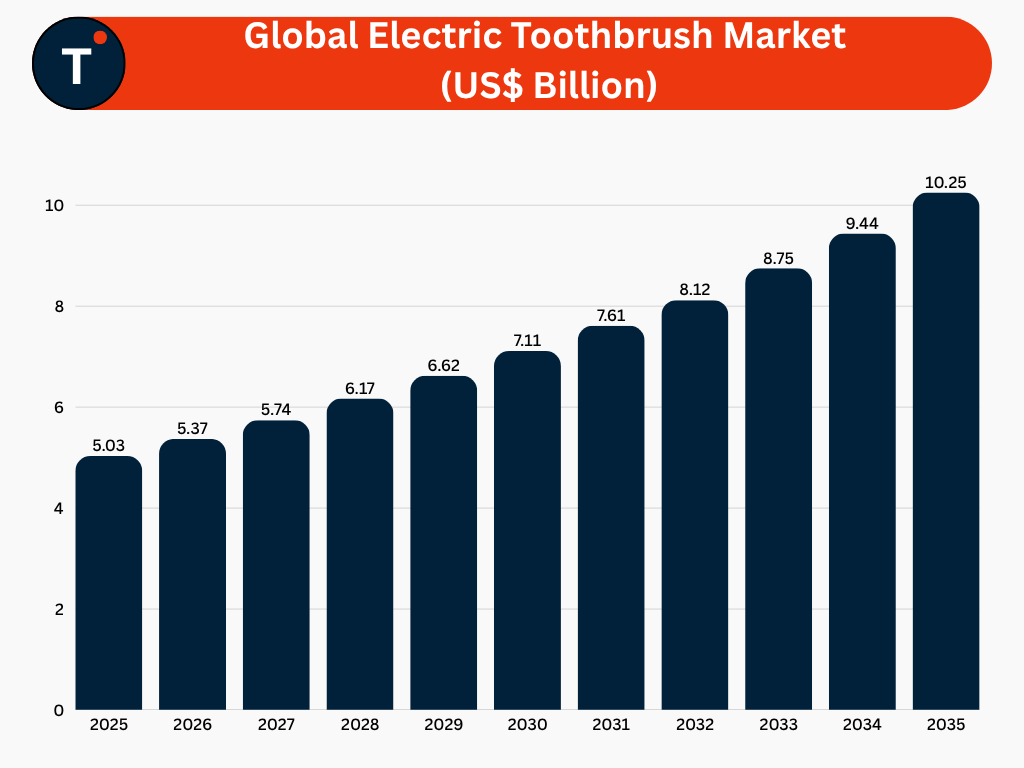
The global electric toothbrush market was valued at US$ 5.03 billion in 2025, reflecting strong consumer demand for advanced oral care solutions.
The market is projected to generate US$ 5.37 billion in revenue in 2026, supported by increasing adoption of premium and technology-enabled toothbrushes.
The global electric toothbrush market is forecast to reach US$ 10.25 billion by 2035, expanding at a CAGR of 7.5% during the forecast period, driven by rising oral health awareness and continuous product innovation.
GlobalElectric Toothbrush Market Split by Geography
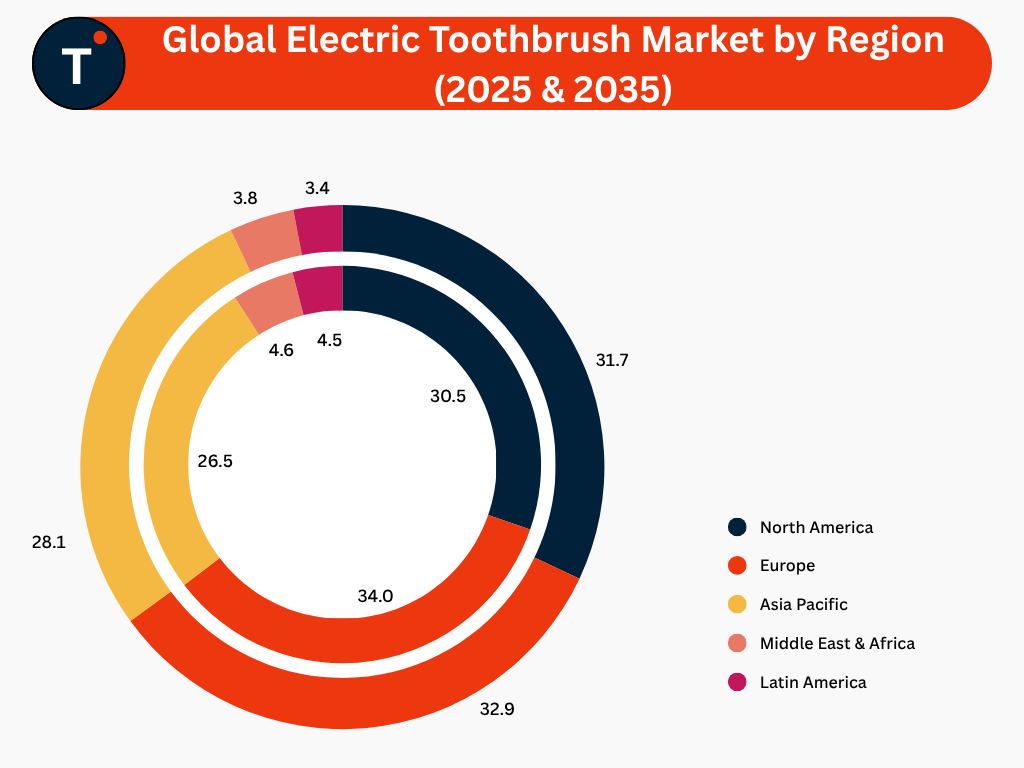
Europe dominated the global electric toothbrush market in 2025, accounting for 34.0% of total revenue.
The European electric toothbrush market was valued at US$ 1.71 billion in 2025 and is projected to reach US$ 3.37 billion by 2035, expanding at a CAGR of 7.0% during the forecast period.
North America represented the second-largest regional market, capturing 30.5% of global market revenue in 2025.
The North American electric toothbrush market was valued at US$ 1.53 billion in 2025 and is forecast to reach US$ 3.25 billion by 2035, registering a CAGR of 7.9%.
Asia Pacific is projected to be the fastest-growing regional market, advancing at a CAGR of 8.2% through 2035.
The Asia Pacific electric toothbrush market is expected to increase from US$ 1.33 billion in 2025 to US$ 2.88 billion by 2035.
The Middle East & Africa electric toothbrush market is anticipated to reach US$ 0.39 billion by 2035.
The Latin American electric toothbrush market was valued at US$ 0.23 billion in 2025.
The US Electric Toothbrush Market Highlights
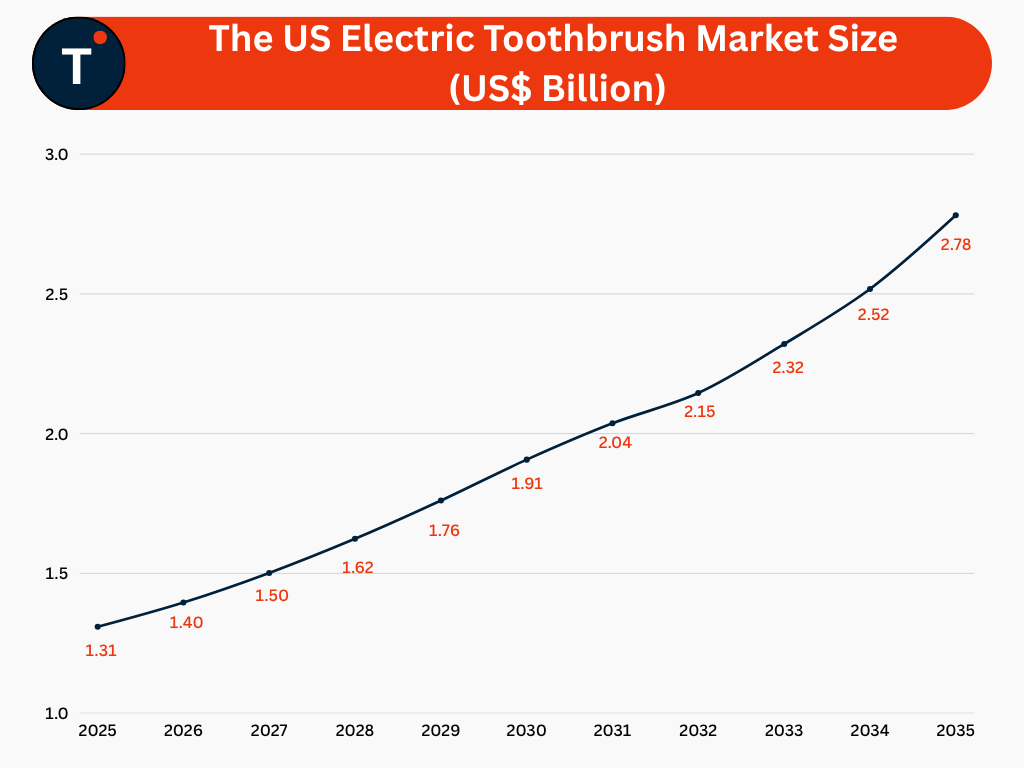
The U.S. electric toothbrush market was valued at US$ 1.31 billion in 2025, reflecting strong consumer adoption of advanced oral care products.
The market is projected to reach US$ 2.78 billion by 2035, supported by increasing awareness of preventive dental care and growing demand for premium oral hygiene solutions.
The United States is expected to remain one of the fastest-growing country markets within the global electric toothbrush industry, expanding at a CAGR of 8.0% during the forecast period.
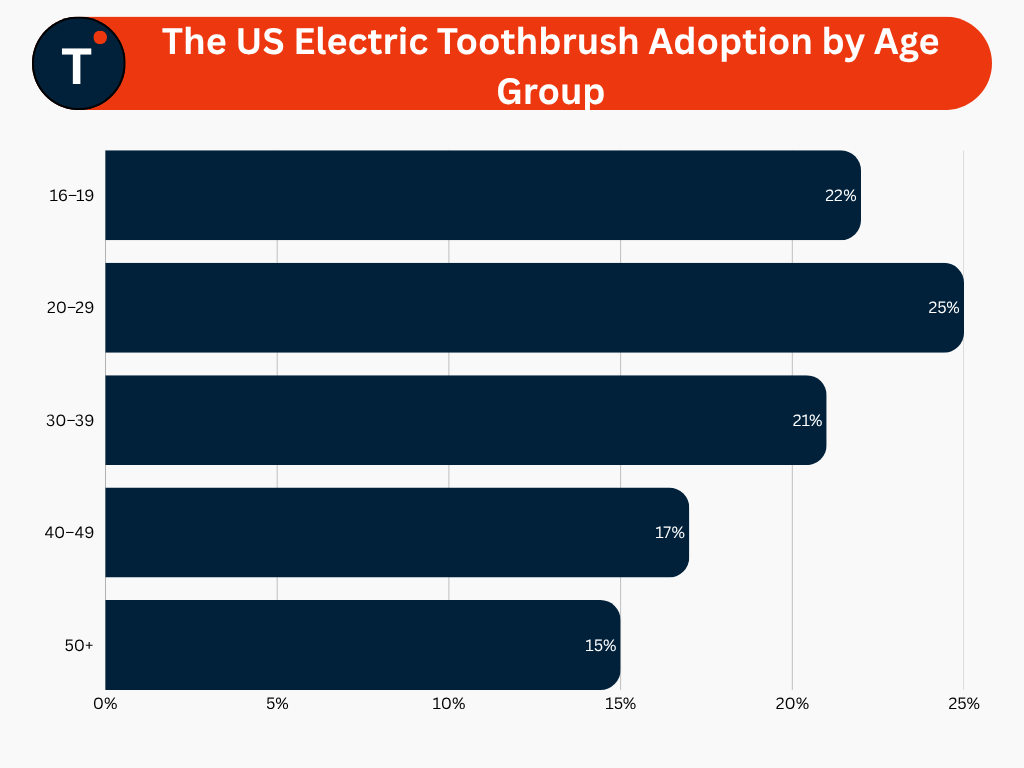
The US Electric Toothbrush Adoption by Age Group
25% of individuals aged 20–29 use electric toothbrushes, the highest adoption rate among all age groups.
The 16–19 age group records a 22% adoption rate, ranking second in electric toothbrush usage.
Consumers aged 30–39 account for a 21% adoption rate.
Electric toothbrush usage among individuals aged 40–49 stands at 17%.
The 50+ age group reports an adoption rate of 15%, the lowest among the analyzed age categories.
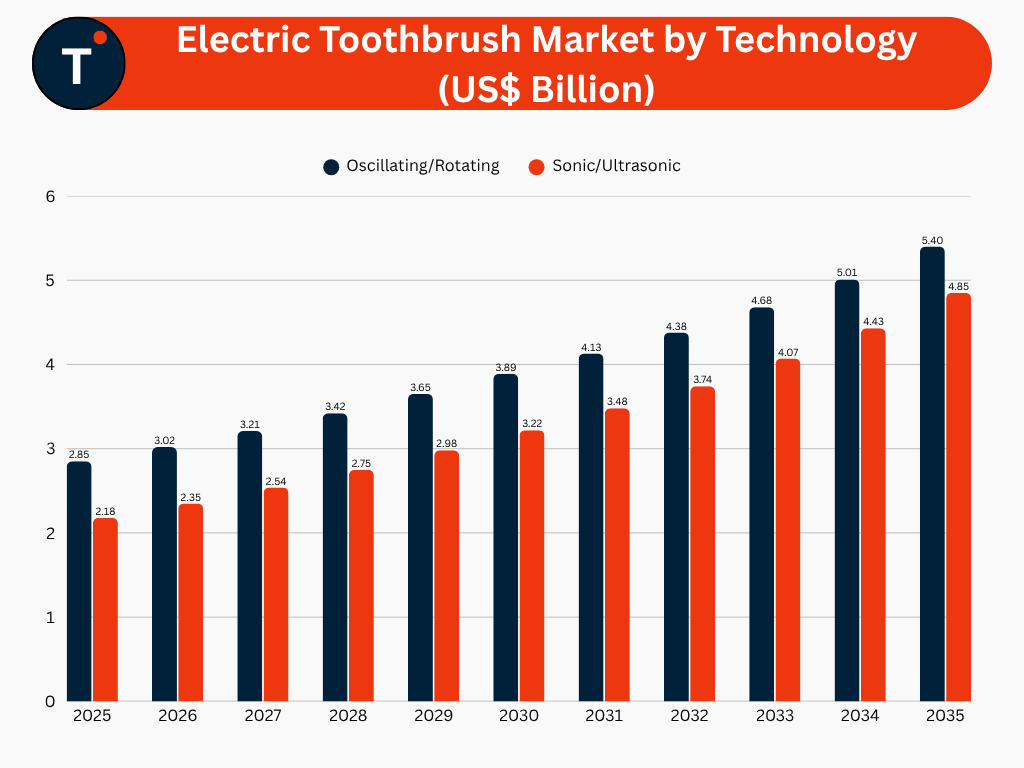
Electric Toothbrush Market by Technology
Oscillating/Rotating technology led the market with a 56.6% revenue share in 2025.
The Oscillating/Rotating segment generated US$ 2.85 billion in 2025 and is projected to attain US$ 5.40 billion by 2035, expanding at a CAGR of 6.7%.
Sonic/Ultrasonic technology is projected to register the fastest growth, advancing at a CAGR of 8.4% during the forecast period.
The Sonic/Ultrasonic segment is forecast to increase from US$ 2.18 billion in 2025 to US$ 4.85 billion by 2035, reflecting strong growth momentum across the category.
Electric Toothbrush Market Revenue Split by Distribution Channels
Distribution Channel
2025 (US$ Billion)
2035 (US$ Billion)
Supermarkets/Hypermarkets
1.89
3.71
Convenience/Grocery Stores
0.43
0.69
Pharmacies/Drug Stores
1.30
2.83
Online Retail Stores
1.18
2.66
Others
0.24
0.37
Total
5.03
10.25
Supermarkets/Hypermarkets led the global electric toothbrush market, generating US$ 1.89 billion in revenue in 2025.
Revenue from electric toothbrush sales through Supermarkets/Hypermarkets is projected to reach US$ 3.71 billion by 2035.
Pharmacies/Drug Stores contributed US$ 1.30 billion to the global electric toothbrush market in 2025.
The Pharmacies/Drug Stores segment is forecast to generate US$ 2.83 billion in revenue by 2035.
Online Retail Stores accounted for US$ 1.18 billion of global electric toothbrush sales in 2025.
Revenue from Online Retail Stores is anticipated to increase to US$ 2.66 billion by 2035.
Convenience/Grocery Stores generated US$ 0.43 billion in electric toothbrush revenue in 2025.
The Convenience/Grocery Stores channel is expected to reach US$ 0.69 billion by 2035.
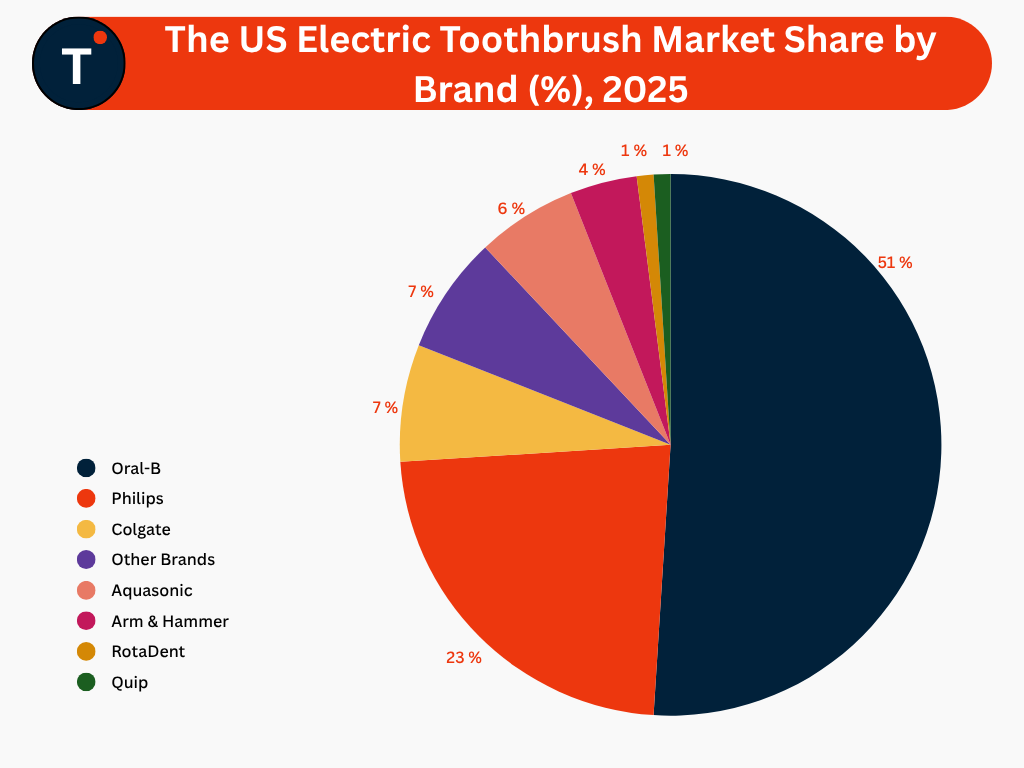
The US Electric Toothbrush Competitive Landscape
Oral-B held the leading position in the U.S. electric toothbrush market with a 51% market share.
Philips secured the second-largest share, accounting for 23% of the U.S. electric toothbrush market.
Colgate captured a 7% share of the U.S. electric toothbrush market.
Aquasonic accounted for 6% of total market share.
Arm & Hammer maintained a 4% share within the U.S. electric toothbrush industry.
RotaDent represented 1% of the market.
Quip also held a 1% share of the U.S. electric toothbrush market.
Electric Toothbrush Pricing Analysis by Brand
Brand
Entry Price
Premium Price
Est. Manufacturing Cost
Philips Sonicare
$25
$330
$8–$25
Oral-B (P&G)
$30
$400
$10–$30
Colgate
$20
$150
$8–$20
Panasonic
$35
$200
$12–$28
Private Label (OEM)
$15
$80
$8–$25
Philips Sonicare electric toothbrushes are priced from US$ 25 at the entry level, with premium models reaching US$ 330. Estimated manufacturing costs range between US$ 8 and US$ 25 per unit.
Oral-B (P&G) offers electric toothbrushes starting at US$ 30, while premium variants are priced up to US$ 400. Manufacturing costs are estimated at US$ 10–US$ 30 per unit, the highest among the analyzed brands.
Colgate electric toothbrushes are positioned in the value segment, with entry-level pricing of US$ 20 and premium models priced at US$ 150. Estimated production costs range from US$ 8 to US$ 20 per unit.
Panasonic electric toothbrushes enter the market at US$ 35 and reach US$ 200 in the premium category. Manufacturing costs are estimated between US$ 12 and US$ 28 per unit.
Private-label (OEM) electric toothbrushes offer the lowest entry price at US$ 15, while premium models are priced up to US$ 80. Estimated manufacturing costs range from US$ 8 to US$ 25 per unit.
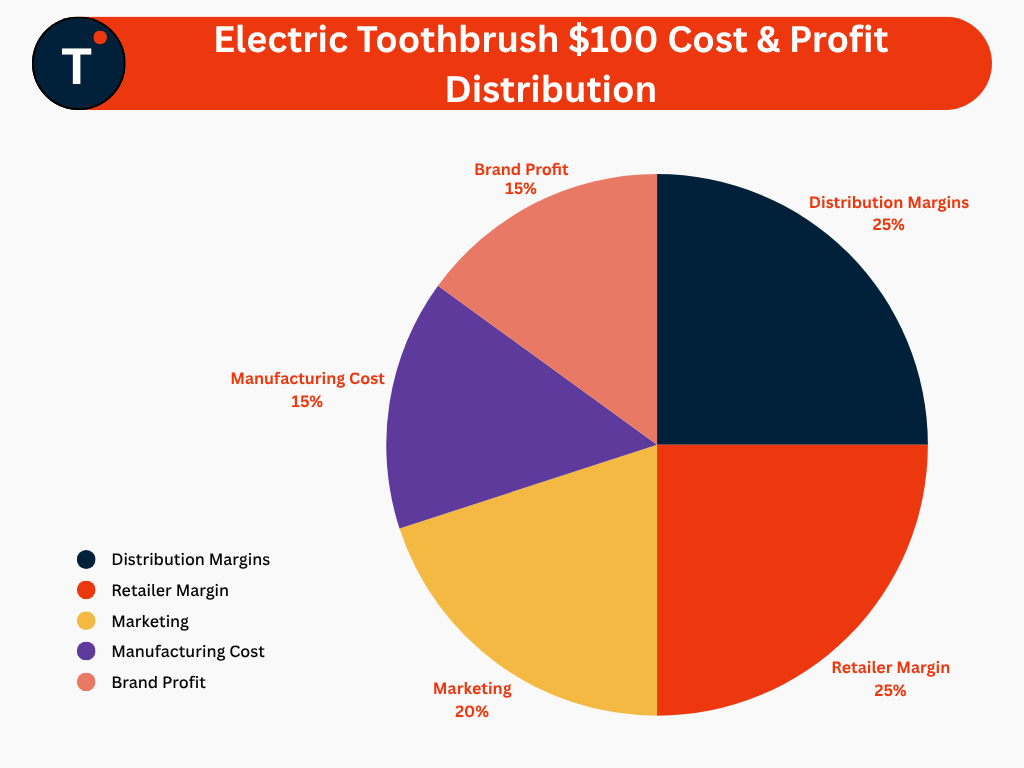
Profit Margin Analysis
Manufacturing costs account for 15% of the retail price, equivalent to US$15 for a US$100 electric toothbrush.
Marketing expenses represent 20% of the retail price.
Distribution margins contribute 25% of the final retail price.
Retailers retain 25% of the retail price.
Brand profit accounts for 15% of the retail price.
Distribution and retail channels collectively capture 50% of the product’s retail value, representing the largest share of the pricing structure.
Manufacturing costs and brand profit each contribute an equal 15% share of the retail price.
Certifications & Compliance
Certification
Typical Cost
Timeline
Market Access
CE (EU)
$2,000–$5,000
3–6 weeks
All 27 EU member states
FCC (USA)
$1,500–$3,000
2–4 weeks
United States
FDA Registration (USA)
$1,000–$3,000
4–8 weeks
USA (if therapeutic claims)
IPX7 Waterproof
$300–$800
1–2 weeks
Required for all major retailers
ISO 13485
$10,000–$30,000
3–6 months
Global quality credibility
BSCI (Ethical sourcing)
$2,000–$5,000
4–8 weeks
European retailers, Costco, Walmart
CE (EU) certification typically costs between US$ 2,000 and US$ 5,000 and requires 3–6 weeks to obtain, enabling access to all 27 European Union member states.
FCC (USA) certification involves an estimated cost of US$ 1,500–US$ 3,000 and a timeline of 2–4 weeks for entry into the U.S. market.
FDA Registration (USA) generally costs US$ 1,000–US$ 3,000 and requires 4–8 weeks when therapeutic claims are associated with electric toothbrush products.
IPX7 Waterproof certification is typically completed within 1–2 weeks at a cost of US$ 300–US$ 800 and is commonly required by major retail chains.
ISO 13485 certification requires an investment of US$ 10,000–US$ 30,000 and a timeline of 3–6 months to establish global quality management credibility.
BSCI certification for ethical sourcing generally costs between US$ 2,000 and US$ 5,000 and requires 4–8 weeks, supporting supplier acceptance among European retailers and major retail chains.
Strategic Industry Developments
In July 2026, Royal Philips introduced the Philips Sonicare Next-Generation DiamondClean 9900 Prestige, featuring advanced intelligent brushing technology that provides real-time feedback and personalized oral care insights.
In May 2026, Royal Philips launched two new Philips Sonicare electric toothbrush ranges, incorporating next-generation Sonicare technology alongside updated branding, packaging, and sustainability initiatives under its “Feel the Care” platform.
In February 2026, AquaSonic expanded its retail presence through a new partnership with Target, introducing the AquaSonic Precision Rechargeable Electric Toothbrush across hundreds of Target stores nationwide.
In January 2026, America’s ToothFairy expanded its partnership with Procter & Gamble (P&G), designating Crest and Oral-B as Major Partners to support oral health education and preventive care initiatives across the United States.
Conclusion
The electric toothbrush market is positioned for sustained growth, driven by increasing oral health awareness, technological advancements, and rising consumer preference for premium oral care products.
Smart electric toothbrushes featuring Bluetooth connectivity, app integration, and personalized brushing insights are gaining significant traction, supporting the industry’s transition toward connected healthcare solutions.
Europe and North America continue to represent key revenue-generating markets, while Asia Pacific is emerging as the fastest-growing region, creating new expansion opportunities for manufacturers.
The U.S. remains one of the most significant markets for electric toothbrushes, supported by strong consumer awareness of oral hygiene, high adoption of advanced dental care products, and a well-established retail infrastructure.
Oral-B and Philips dominate the competitive landscape, collectively capturing a substantial share of the U.S. electric toothbrush market through continuous innovation and strong brand recognition.
Ongoing product launches, technological advancements, and strategic partnerships by leading manufacturers are expected to strengthen market competition and accelerate category growth throughout the forecast period.
Add TriCityLocalNews as a Preferred Source on Google for instant updates!
Rob Enderle is a Principal Analyst and seasoned market strategist with over 13 years of experience advising global technology leaders, including Microsoft, IBM, Intel, HP, and Infosys. Holding an MBA from the Massachusetts Institute of Technology (MIT), Rob specializes in helping enterprises anticipate technology shifts, identify lucrative business opportunities, and execute high-impact "zero dollar marketing." As an expert industry commentator, he extensively covers startup funding, mergers and acquisitions, and corporate growth predictions, providing companies with the actionable intelligence needed to build credible, lasting dialogues with their target markets.
We use cookies to ensure that we give you the best experience on our website. If you continue to use this site we will assume that you are happy with it.